
Finding what lies beneath the overburden.
Case histories and publications from exploration campaigns across Nevada, Arizona, Alaska, Mexico and Australia, using phytogeochemistry and mercury soil gas to detect blind mineralization.
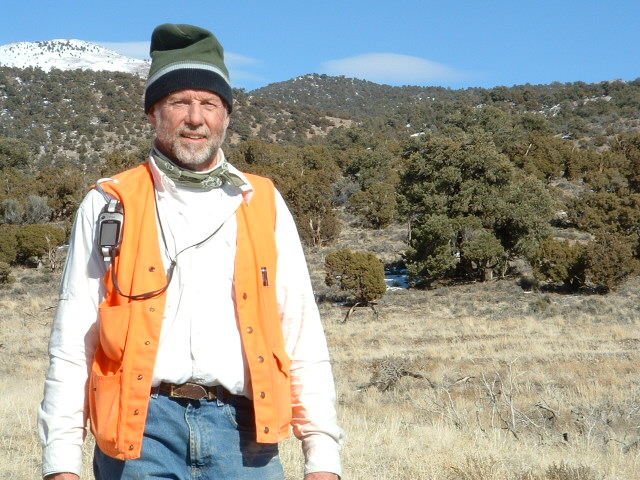
Case histories
Published and presented results from exploration campaigns across Nevada, Arizona, Alaska, Mexico and Australia, showing how these methods have performed over blind deposits.
Phytogeochemistry as a bedrock fault mapping tool
GSN Symposium, Sparks, Nevada, May 4, 2022.
Pinson Mine
Getchell Trend, north-central Nevada. Society of Economic Geologists, 2003, updated 2016.
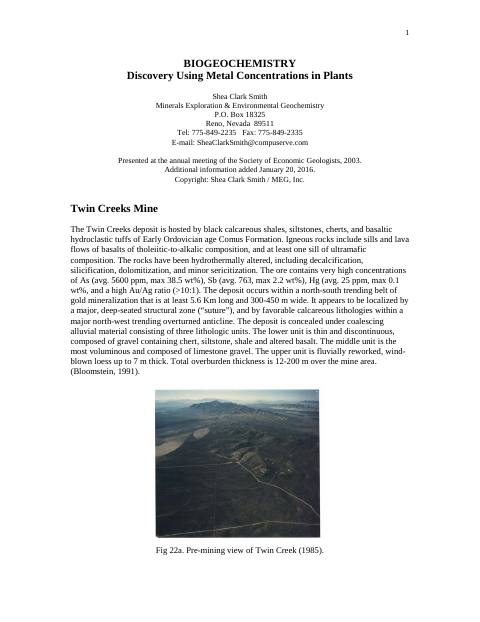
Twin Creeks Mine
Carlin-type gold in Comus Formation shales. SEG annual meeting, 2003, updated 2016.
North Silver Bell
Laramide porphyry copper with a classic leached cap and enrichment blanket.
Bisbee, Cochise County
Gold potential south of the Bisbee porphyry. SME/AIME 1992, updated 2016.
Mule Canyon Mine
Sagebrush results that pre-dated the 1986 Gold Fields discovery.
Rosebud Mine
Kamma Mountains, Pershing County. GSN Symposium Proceedings, 2005.

Chandalar bryophytes
A bryophyte alternative to stream sediment geochemistry. Alaska Miners Association, 2006.
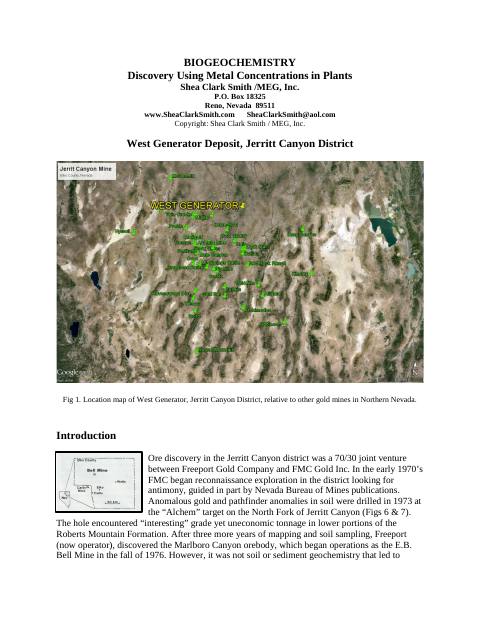
West Generator Deposit
Jerritt Canyon District, northern Nevada.
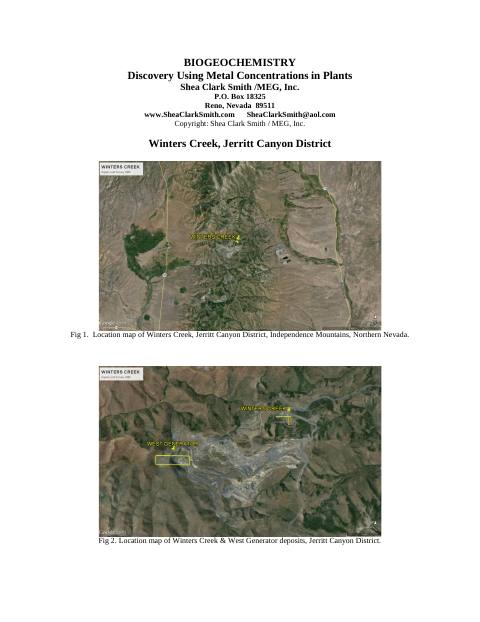
Winters Creek
Jerritt Canyon District, Independence Mountains.
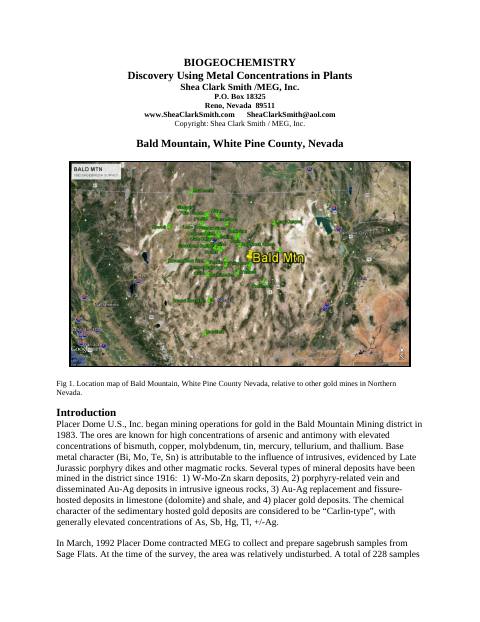
Bald Mountain
White Pine County, with Placer Dome U.S.
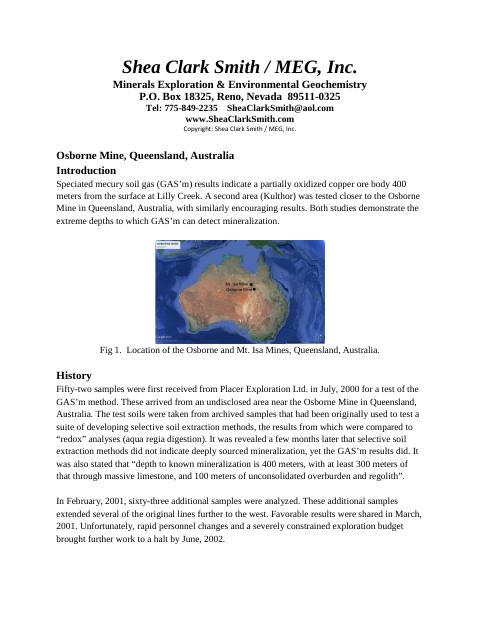
Osborne Mine, Queensland
Speciated mercury soil gas over a copper ore body 400 meters below surface.
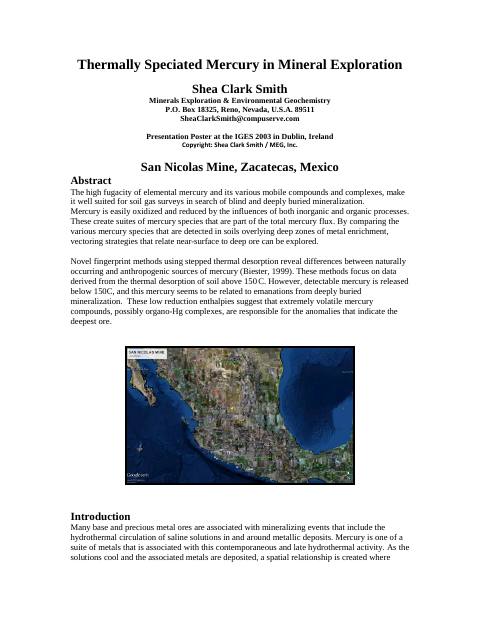
San Nicolas Mine, Zacatecas
Thermally speciated mercury. Poster, IGES 2003, Dublin.
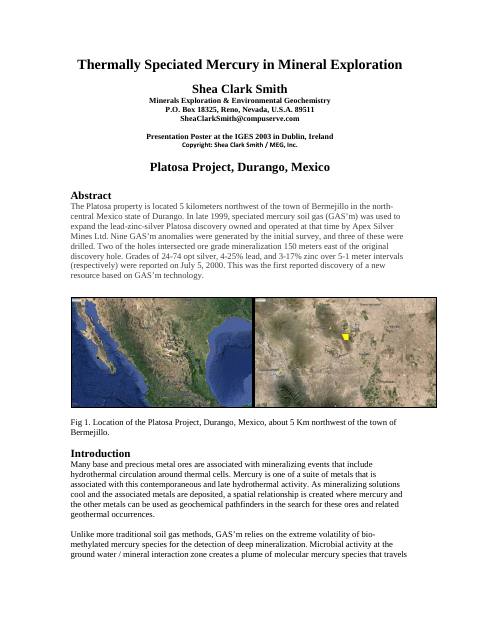
Platosa Project, Durango
The first reported discovery of a new resource based on GAS'm technology, in 2000.
Get in touch
Shea Clark Smith
- P.O. Box 18325, Reno, Nevada 89511
- Phone
- (775) 560-1817
- SheaClarkSmith@aol.com